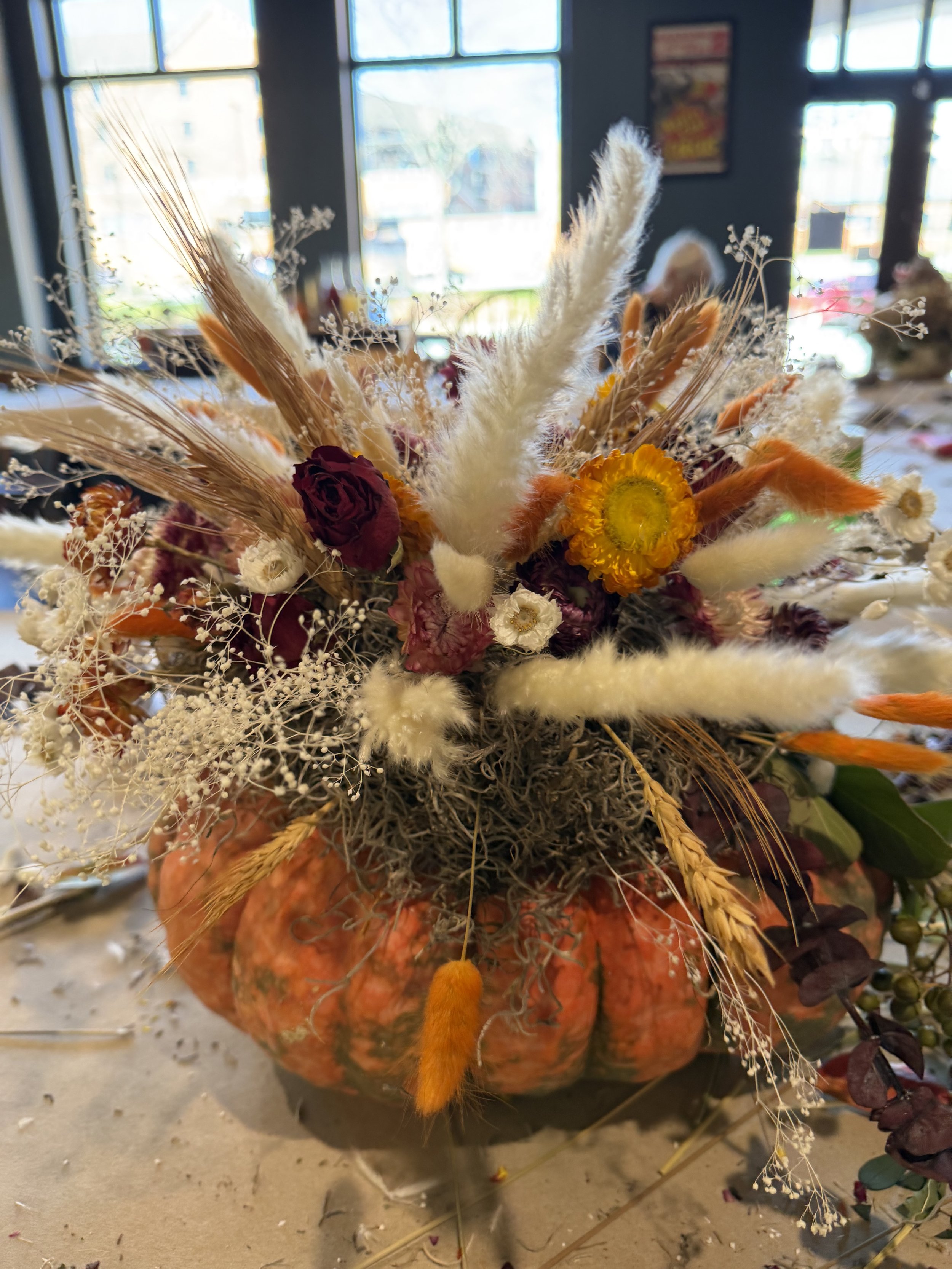
Last weekend, a room full of people sat down at Good Girls Bakery in Exton, coffee in hand, a cinnamon sugar morning bun within arm's reach, and did something that's surprisingly hard for a lot of us: we slowed down.
This was our fall Breathe & Bloom workshop, a morning of mindfulness and dried floral design I host with Hanna of Pampas Plumes Co. I didn't expect that watching people build their pumpkin centerpieces would teach me as much about high achievers as anything I could learn in a textbook.
Why is slowing down so hard for high achievers?
For so many Type-A (or formerly Type-A) people, slowing down feels less like rest and more like falling behind. Your brain has learned (very effectively, I might add) that productivity equals safety. Your productivity determines your worth.
The problem is that this wiring doesn't come with an off switch. When you finally get a quiet moment, your mind fills it with the to-do list or the replay of that thing you said in a meeting three days ago.
A few patterns I see all the time:
Rest feels like something you have to earn. (And even then, the finish line keeps moving.)
Trying something new feels risky. If you're used to being good at things, being a beginner is uncomfortable. Like, really uncomfortable. What's the point of doing something if you aren't already good at it?!?
The frustration is real. When something isn't going the way you pictured, the instinct is to push harder, fix it, or f- it.
Being present feels unproductive. Focusing on just ONE thing at a time? No thank you!
What happened at the fall Breathe & Bloom workshop?
Before anyone touched a single stem, I led a short mindfulness meditation. We started with the breath, then moved through our senses: what we could hear, smell, and feel in that cozy, autumn-y space.
Then everyone turned their attention to the pumpkin they'd chosen. We explored it like we'd never seen a pumpkin before. The weight of it. The ridges. The cool, slightly bumpy skin. The color, which is never just one hue when you actually look. (My personal favorites were the sage greens. Millennial green will never go out of style.)
From there, we sat with something I find kind of mind-blowing: how unlikely that moment was. So many things had to go right for each of us to be sitting in that room on that morning. And so many things had to go right for those pumpkins to grow, too: the seed, the soil, the sun, the rain, the person who harvested them. None of it was guaranteed, all of it was temporary. And we got to be there for it!
I also realize the idea of impermanence can be pretty...morbid. But I see it as an amazing opportunity. If this moment is fleeting and wildly improbable, it's the most incredible gift to be present in it.
What does trusting the process actually look like?
Then came the fun part. Hanna walked everyone through building a dried floral pumpkin centerpiece, and this is where it got real.
I watched people try something brand new. I watched the moment when a stem wouldn't sit right, or the arrangement looked lopsided, or it just didn't look like the picture in their head. You could see the frustration. (I was admittedly there myself, working on my mini white pumpkin.)
And then, with Hanna's encouragement, people kept going. They adjusted, tried new angles, and dropped some expectations. They stopped trying to force it and started trusting the process, and maybe trusting themselves a little more, too.
By the end of the morning the arrangements were stunning. Every single one was different, and every single one was beautiful.
It was a timely lesson in a pretty pumpkin package: the messy middle is a normal part of how anything good gets made, whether that's a centerpiece, a career, or a life that doesn't leave you running on fumes and caffeine.
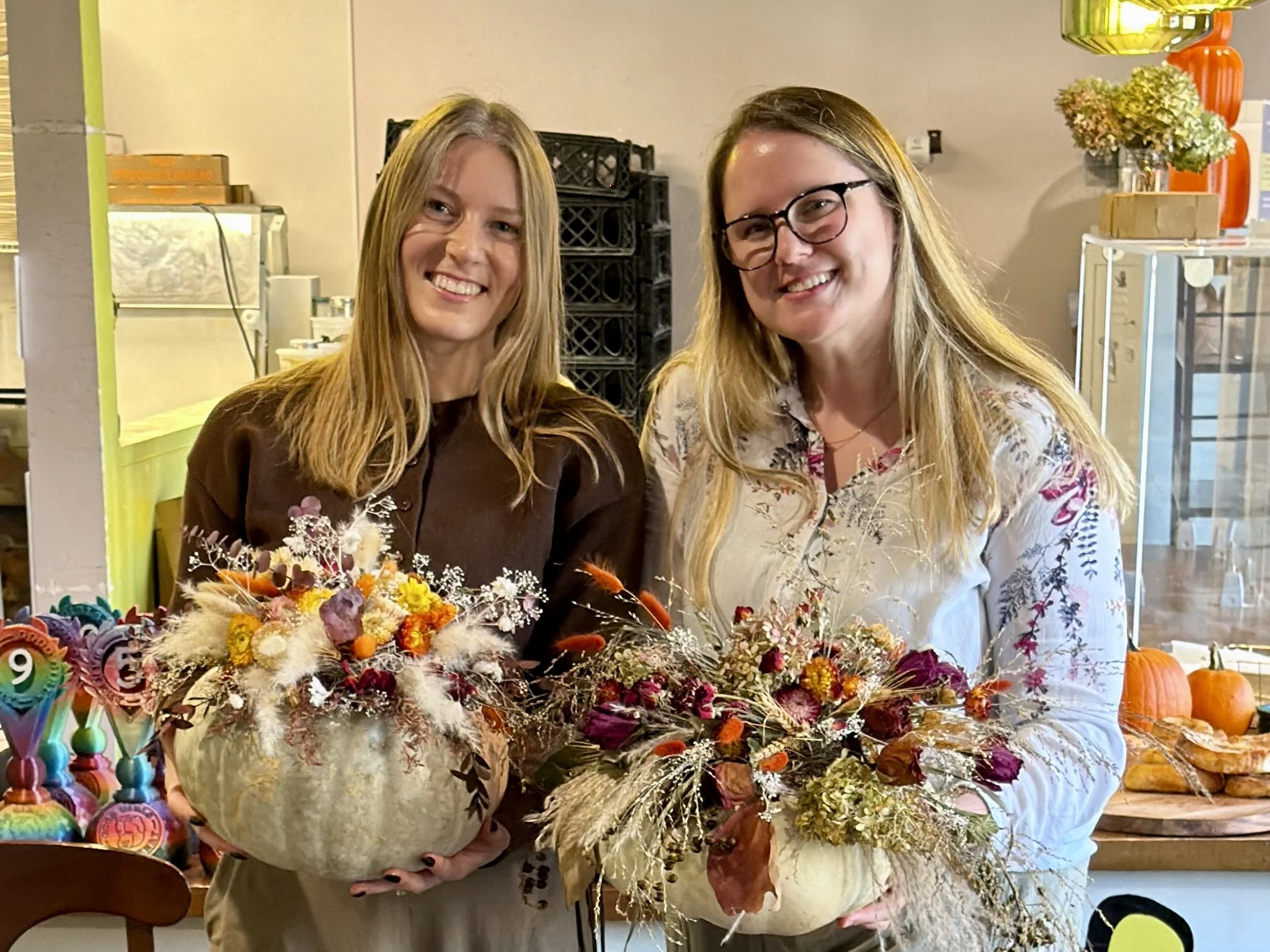
Hanna and Ashley display some beautiful pumpkin centerpieces at the Breathe & Bloom mindfulness floral design workshop in Exton, PA.
A sensory mindfulness practice you can try at home
You don't need a workshop (or a pumpkin) to try this. Any small object works: a mug, a piece of fruit, a stone from your walk.
Start with three slow breaths. Let your exhale be a little longer than your inhale.
Look at your object like you've never seen one before. Notice the colors, shadows, and edges.
Hold it. Notice the weight, the temperature, and the texture.
Bring in your other senses. Does it have a smell? Does it make a sound if you tap it?
Think about its journey. Everything that had to happen for this object to end up in your hands, right now.
When your mind wanders (and it will), gently come back to the object. There's no need to judge yourself! This is normal. Repeatedly coming back is the practice.
You can do this for just 60 seconds. A couple minutes (or more!) is plenty. The goal is to practice being where you are, rather than emptying your mind, or magically feeling at peace.
Frequently Asked Questions
What is a mindfulness workshop like?
At Breathe & Bloom, it's relaxed and hands-on. We begin with a guided meditation focused on the breath and the senses, then move into a creative project. No experience with meditation or floral design is needed.
Is a mindfulness workshop the same as therapy?
No. Breathe & Bloom is an educational and creative wellness experience, not therapy or treatment. If you're looking for individual support with anxiety, burnout, or work-life balance, that's a different conversation, and you're welcome to reach out to learn more about Bravewood's services.
When is the next Breathe & Bloom workshop?
We're planning our next workshop for late winter or early spring 2027. Follow @PampasPlumesCo and @bravewoodpsych on Instagram to be the first to hear when dates are announced.
A huge thank you:
To Hanna of Pampas Plumes Co , for her artistry, patience, and endless encouragement. To Good Girls Bakery in Eagleview Town Center, for the coffee, tea, and those cinnamon sugar morning buns (still thinking about them). And to everyone who joined us: thank you for being part of such a beautiful, unlikely morning.
This post is for educational purposes only and isn't a substitute for professional mental health care. Reading it doesn't create a therapist-client relationship. If you're in crisis, call or text 988 to reach the 988 Suicide & Crisis Lifeline.
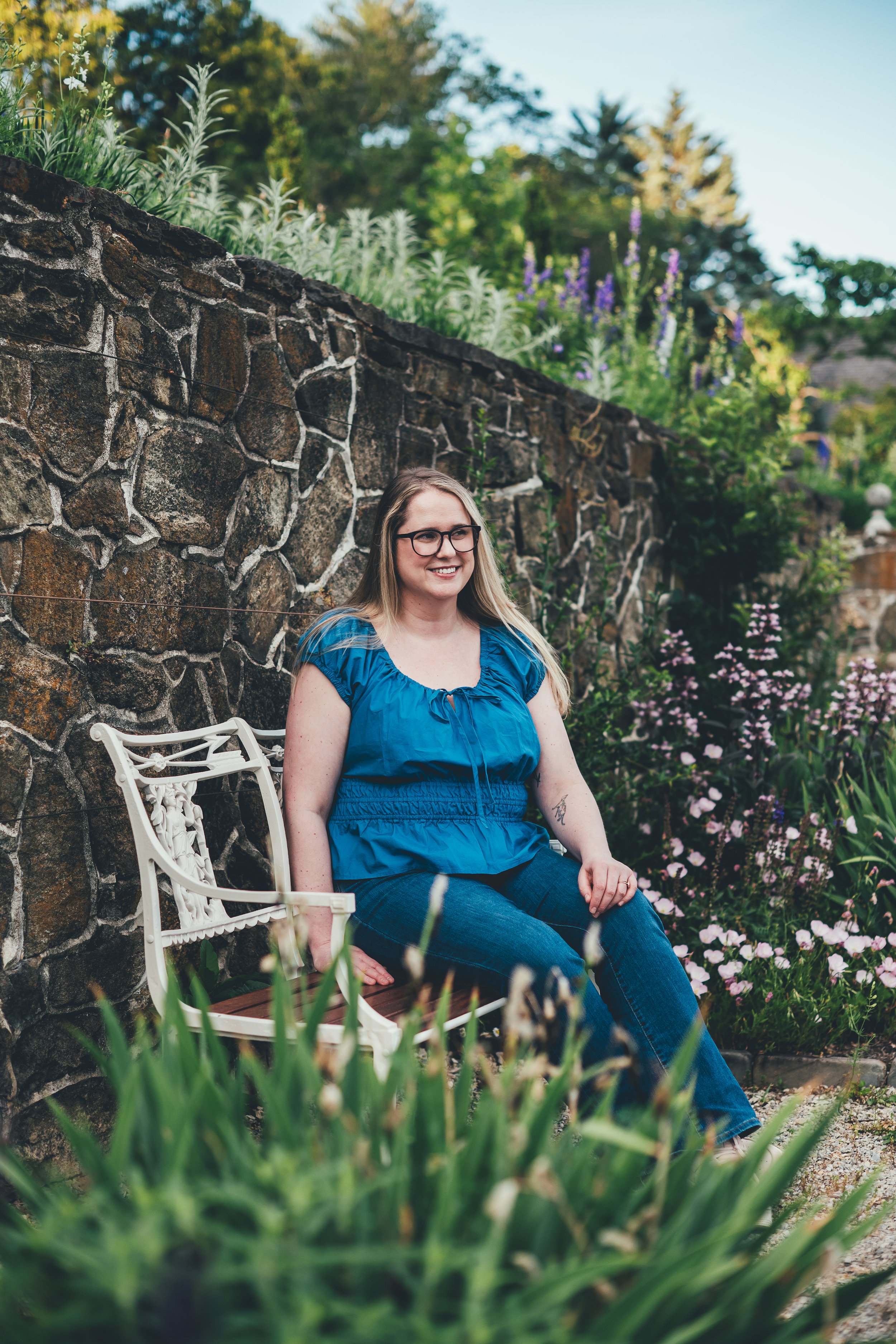
Ashley Sutton, Psy.D., is a licensed clinical psychologist and founder of Bravewood Behavioral Health.
She specializes in helping high-achievers, exhausted professionals, and highly stressed working parents navigate burnout, overwhelm, and anxiety. She sees clients virtually in Pennsylvania, New York, and 42 additional states.